
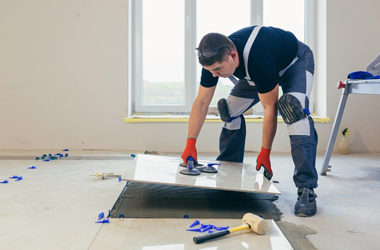
How to Avoid Hollow Sounds After Tile Installation
Ever stepped onto a freshly tiled floor and heard a strange hollow ping? It’s that weird echo that makes you think, “Wait, is my floor supposed to sound like a drum?” If you’re noticing hollow tiles after installation, you’re definitely not alone, and that hollow tile sound can actually signal problems that are easier to fix now than later. You might be also wondering, why do tiles sound hollow, and whether it’s a DIY fix or a call for a pro. Don’t worry, we’ve got you covered. This guide will walk you through the reasons behind those hollow sounds, how to spot the problem early, and the tricks installers use to make floors stay solid and quiet. By the time you finish reading, you’ll know how to avoid hollow tiles, keep your floor durable and squeak-free, and confidently avoid tile installation mistakes before they become problems you regret. What Causes Hollow Sounds Under Floor Tiles? So, what causes hollow sound under floor tiles? Simply put, it’s air. That drum-like echo happens when there’s a gap, a void, between the back of your tile and the surface it’s supposed to be stuck to. But these voids don’t just appear out of nowhere. Most of the time, they are caused as a result of a few mistakes during the tile installation process. Let’s break down the usual ones, because knowing the “why” is your first step to a permanent fix. The Adhesive Shortcut (A.K.A. “Spot Bonding”): This is the big one. Instead of spreading adhesive over the whole floor or the whole back of the tile, an installer might just put little blobs in the corners and center. It looks stuck, but most of the tile is just hovering over an air pocket. This is a classic tile installation mistake to avoid. The Unprepared Stage (The Subfloor): Imagine trying to stick a sticker perfectly onto a lumpy, dusty piece of cardboard. It won’t stick evenly. It’s the same with tile. The Wrong “Glue” or Technique: Using a cheap, non-polymer-modified adhesive, mixing it too wet or too dry, or using the wrong notched trowel can all lead to poor coverage that shrinks and pulls away as it dries, creating, you guessed it, voids. The Squeeze Play (No Room to Breathe): Tiles and the concrete underneath expand and contract with temperature and moisture changes. If they’re installed tight, edge-to-edge, with no expansion joints, they can press against each other and actually lift up slightly, creating a hollow spot. Now, sometimes, a hollow sound on tile floor isn’t a problem. Installations over a few underlayments (like soundproofing membranes) or foam shower bases will naturally sound different. But if your floor was installed directly on a concrete slab or cement board, and you’re hearing patchy hollow sounds, it’s likely one of the issues above. Signs You Have Hollow Tiles Okay, so you’ve got a suspicion. Maybe you heard a weird thud while moving a chair, or the floor just doesn’t feel right underfoot. How do you know for sure if you’ve got a hollow tile situation on your hands? The classic test is the “coin tap.” Grab a coin or the handle of a screwdriver and gently tap it across your tile floor. A solid, well-bonded tile will give you a crisp, high-pitched ping. A hollow one gives you a deeper, duller thud. If you’re hearing that tell-tale hollow sound on tile floor in a specific spot, you’ve likely found a void. But sometimes your ears aren’t the only clue. Here are a few other signs your floor is trying to tell you something: The Squeak or Creak: If you hear tile squeaking after installation when you walk over a spot, that’s a red flag. It often means the tile is flexing ever so slightly against its neighbor or the subfloor because it’s not fully supported underneath. The “Spongy” Feeling: Does a section of the floor feel slightly springy or soft when you step on it? It’s a sign of movement from a lack of support below. Cracked Grout Lines: Take a look at the lines between your tiles. Are there small, spider-web cracks appearing for no reason? This can happen when tiles move independently (because they’re not fully stuck down), putting stress on the rigid grout and cracking it. So, you’ve done the tap test and spotted a sign or two. Now you’re probably asking the next logical question: “should hollow tiles be replaced,” or is this something you can live with? Let’s talk about that, because the answer isn’t always the same. Should Hollow Tiles Be Replaced Alright, you’ve identified the problem tile, the one that sounds like a tiny drum. Now comes the big decision: do you rip it out, or is there a way to fix it from the top? Let’s break down your options so you can decide what makes sense for your floor. First, ask yourself a couple of quick questions: Is the tile loose? Can you feel it rock or move when you press the corner? Is it cracked? Any visible damage on the surface? Is it in a high-traffic or wet area? Like a hallway, kitchen, or shower? If you answered yes to any of these, the most reliable, long-term fix is to have it professionally removed and reinstalled. Trying a shortcut on a loose or cracked tile in a busy area is like putting a bandage on a leaky pipe. It might hold for a bit, but it’ll likely fail when you need it most. But what if the tile is firmly in place, not cracked, and the hollow spot is small? Maybe it’s in a low-traffic closet or a corner of the room. Then you might be wondering, “how to fix hollow tiles without removing them” and if it is even possible. The good news? It can be. The method is called void filling or injection. A very runny adhesive (like a specialized epoxy or grout) is injected through a tiny hole in the grout